The Long Table

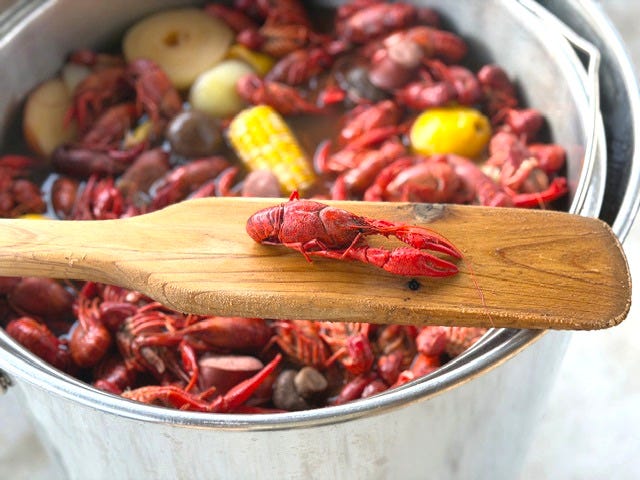
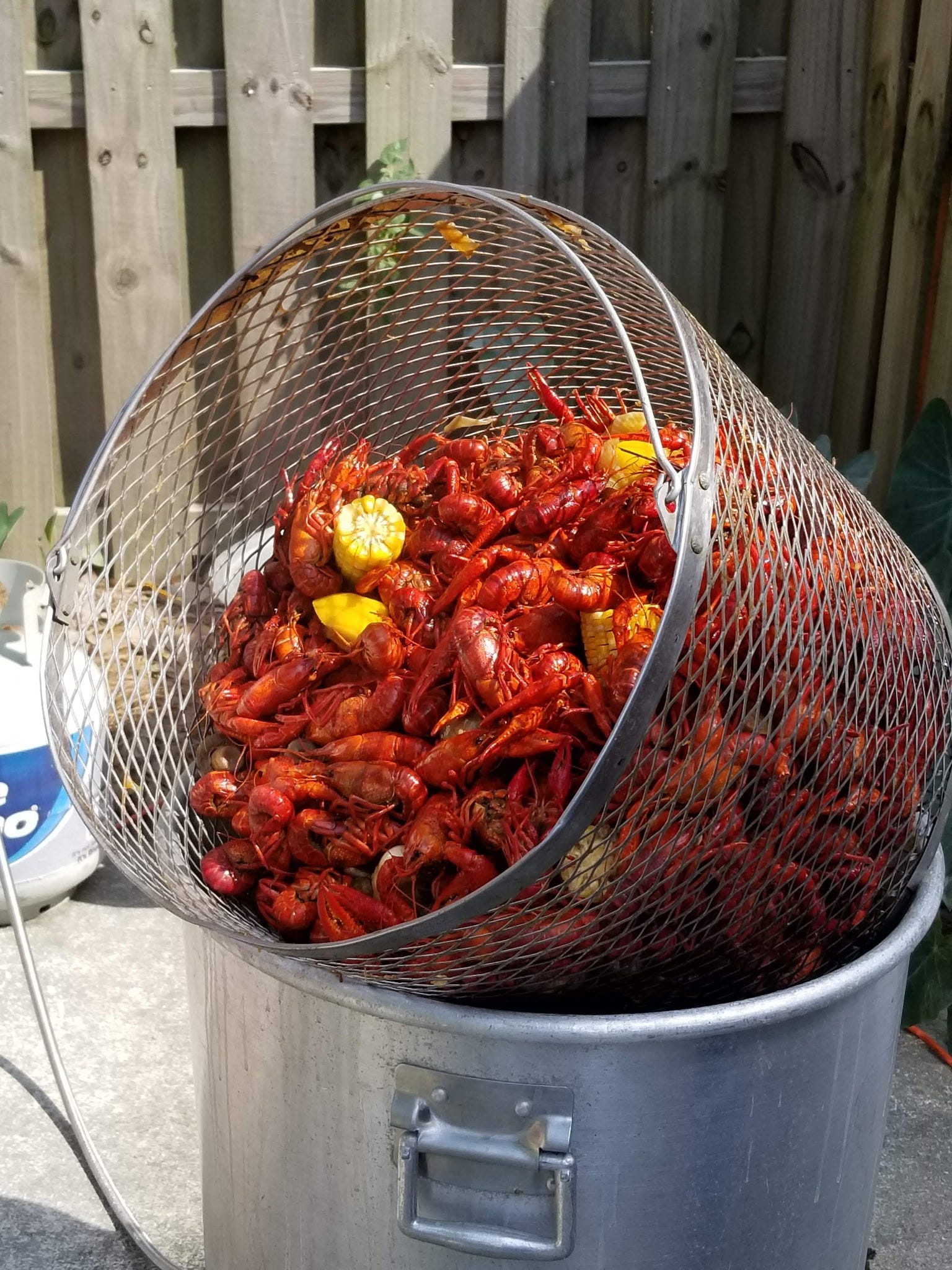
There’s a moment at every crawfish boil—right after someone dumps the first sack into rolling water and the smell of cayenne, garlic, and lemon hits the air—when something shifts. Strangers become neighbors. Neighbors become family. The cooler opens, someone hands you a beer you didn’t ask for, and the only agenda for the next few hours is standing around a table, peeling mudbugs, and telling stories. It’s not complicated and that’s what makes it sacred.
Here’s a confession that will ruffle the feathers of my Cajun friends: I don’t even really care for crawfish. I can take them or leave them. But I will drive across town, fire up the burners, and buy a couple of sacks without thinking twice—because for me, it is never about the crawfish. It’s about the people who show up when you dump them on the table. It’s about the strangers standing in my backyard who won’t be strangers by the time the last corn cob is gone. That’s the thing I’m after. And it surprises me, because by nature, I’m a person who seeks the quiet. I’d rather sit alone in a deer stand or walk a tree line with my dog than work a room full of people. Crowds have never been my currency. It’s something I never chase. But a crawfish boil isn’t a crowd. It’s a communion. And even someone like me can feel the difference.
The Cajuns understood this. Their culture was forged by displacement and hardship, but what survived wasn’t bitterness—it was generosity. They built a way of life around the idea that you don’t eat alone, you don’t cook alone, and you don’t suffer alone. The boucherie and the crawfish boil—these weren’t just meals. They were the architecture of their community. You can find this same blueprint across many cultures. The low-and-slow traditions of Southern barbecue, where a whole hog goes on the pit before midnight and the neighborhood gathers around it by noon the next day. The Italians built the same understanding into the village sagra, an annual feast where the whole town turns out to cook, eat, and argue together for days. The Polynesians call it a luau—a gathering centered on food and music where no one checks the guest list because the assumption is that everyone belongs.
The backyard crawfish boil is a direct descendant of these beliefs. It is, at its core, an act of radical generosity disguised as a party. A neighbor arrives early to help setup. Someone buys the sacks of crawfish. Someone brings the burners. Someone shows up with corn and potatoes and sausage. Someone brings the ice. The contributions just happen, because everyone knows it’s the gathering that matters. It’s the old man who teaches a kid how to peel her first crawfish with the patience of someone who’s done it ten thousand times. It’s when someone you barely know refills your cup without a word. Community isn’t built in the big moments. It’s built in these—the small, unremarkable acts of showing up and paying respect to the people around you.
I’ve seen this play out in my own backyard. I’ve watched a man in a MAGA hat standing elbow-to-elbow with someone in a Stacey Abrams t-shirt, both too busy peeling to argue. Nobody declared a truce. Nobody moderated a debate. The crawfish just did what the crawfish always do—they put people shoulder-to-shoulder around a common task and let the rest work itself out. I don’t know that those two folks walked away as friends. But I’d wager they walked away having heard each other in a way that a Facebook comment section never allows. Perhaps they left understanding each other’s differences better than when they arrived.
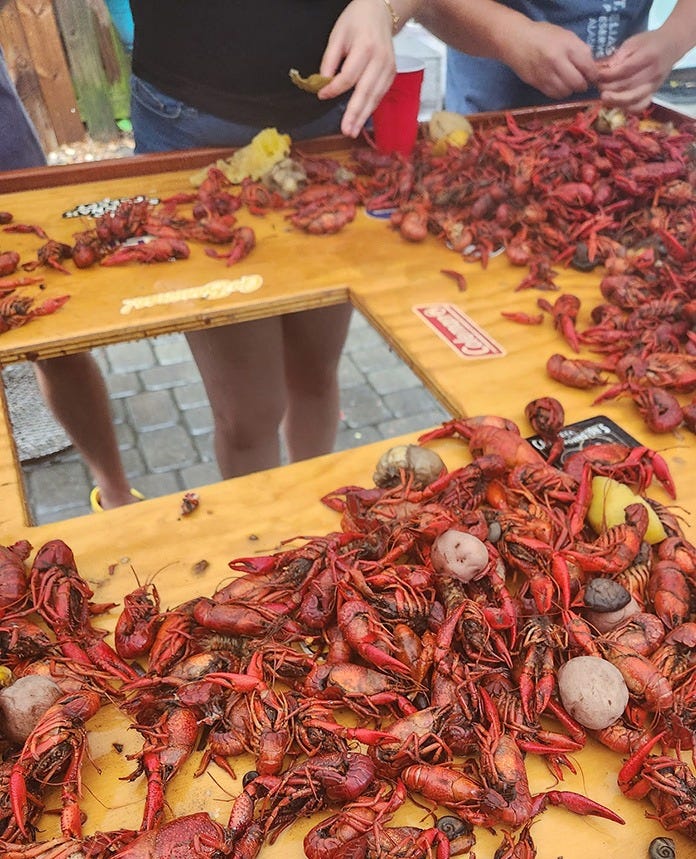
And then there’s the table itself. Not a dining table with place settings and assigned seats—a wooden table, rough-hewn and stained from years of crawfish being dumped on it. It’s the altar of the whole operation. When the crawfish get spread across that wood in a steaming, red-orange heap, something happens that no reservation at a restaurant can replicate. Everyone crowds in. Elbows touch. CEOs stand next to the ditch diggers. The guy you just met is shoulder to shoulder with your friend of decades. There’s no head of the table because the table has no head—just four sides filled with food that belongs to everyone equally. The table strips away every pretense that people arrived with and leaves nothing but the act of sharing a meal with the people around you. It is the most democratic piece of furniture ever built. I didn’t build or buy my crawfish tables. They were given to me by a friend. Which is kind of the point of all this.
We need more backyard meals. We need more cold beer in the cooler and more excuses to gather in the fading light of a Saturday afternoon. We need to stop waiting for someone else to send the invitation and start being the person who fires up the burner. We need to talk with people we might not agree with politically and learn something from a culture we might not have known even existed. These are not heroic acts that deserve a status update. They are human ones and we have starved ourselves of them. We need the small things back—the early arrivals, the shared tasks, the quiet refills, the conversations that start over a pile of crawfish and end with something that looks an awful lot like family. The richest life isn’t the one lived most efficiently. It’s the one lived most generously, elbow to elbow, around a long table with the people who stayed.